Hi, I'm Trent Mankelow. I grew up in Tauranga, studied software engineering in Hamilton, and moved to Wellington after graduating.
I started working for a large multinational, but before too long co-founded a usability consultancy with a friend. We started with observational research, expanded into interaction and service design, built one of our internal tools into a SaaS company, and eventually sold both businesses. I spent time on the leadership teams at Vend (fast-growing SaaS), Trade Me (granddaddy of New Zealand's tech scene), and Summer of Tech (much-loved not-for-profit) before taking time out to spend more time with my kids.
Chapter One · Tauranga to Wellington
1. Early career
1996–2002
I grew up on a farm in Tauranga and wanted to be a programmer from the age of 11. That took me to the University of Waikato to study Computer Science, where I discovered human-computer interaction in my final year. I was fascinated by the intersection of psychology and technology and how to design things that are intuitive and easy to use.
My degree. First Class Honours, no less.
My first proper job was as a C++ engineer at Unisys in Wellington.
My first day of work at Unisys, January 2000. A silk tie!
After about 18 months, I left to do some freelance work before co-founding Last.co.nz, a startup doing last-minute deals that never quite got off the ground, despite a year and a half of hard work. My first startup failure.
Chapter Two · The consultancy
2. Optimal Experience
2003–2014 · CEO, Co-founder and Director
In late 2002, my mate Sam and I reviewed the usability of a website called lawfuel.com. That review was the first project we completed under the banner of what would become Optimal Experience, a UX consultancy started with $5,000 my dad lent us.
Dad always had a way with words.
We started out doing mostly observational research—watching people interact with technology and finding the things that were confusing, annoying, and frustrating—before moving into interaction and service design.
Observational research in action: usability testing the Yellow Pages website, 2006.
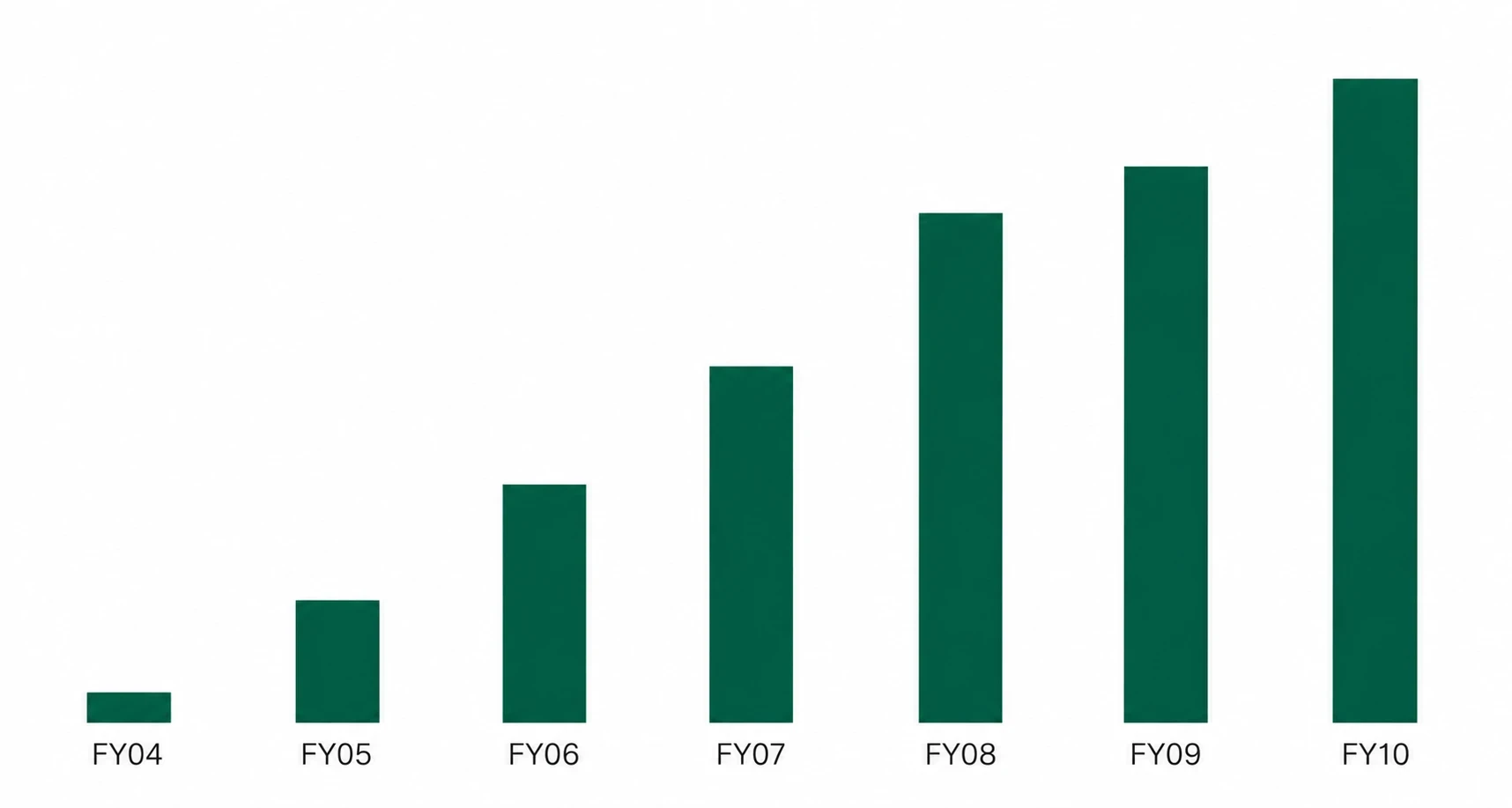
In our first year, we made $39,000, not much when you take out expenses and divide by two, but from year two things started to look up.
Revenue growth in the early years, up and to the right.
Along the way, I felt like I had four distinct jobs: starting as a practitioner, then moving into sales, management, and then leadership, where I was ultimately responsible for the vision, values, and culture of the organisation.
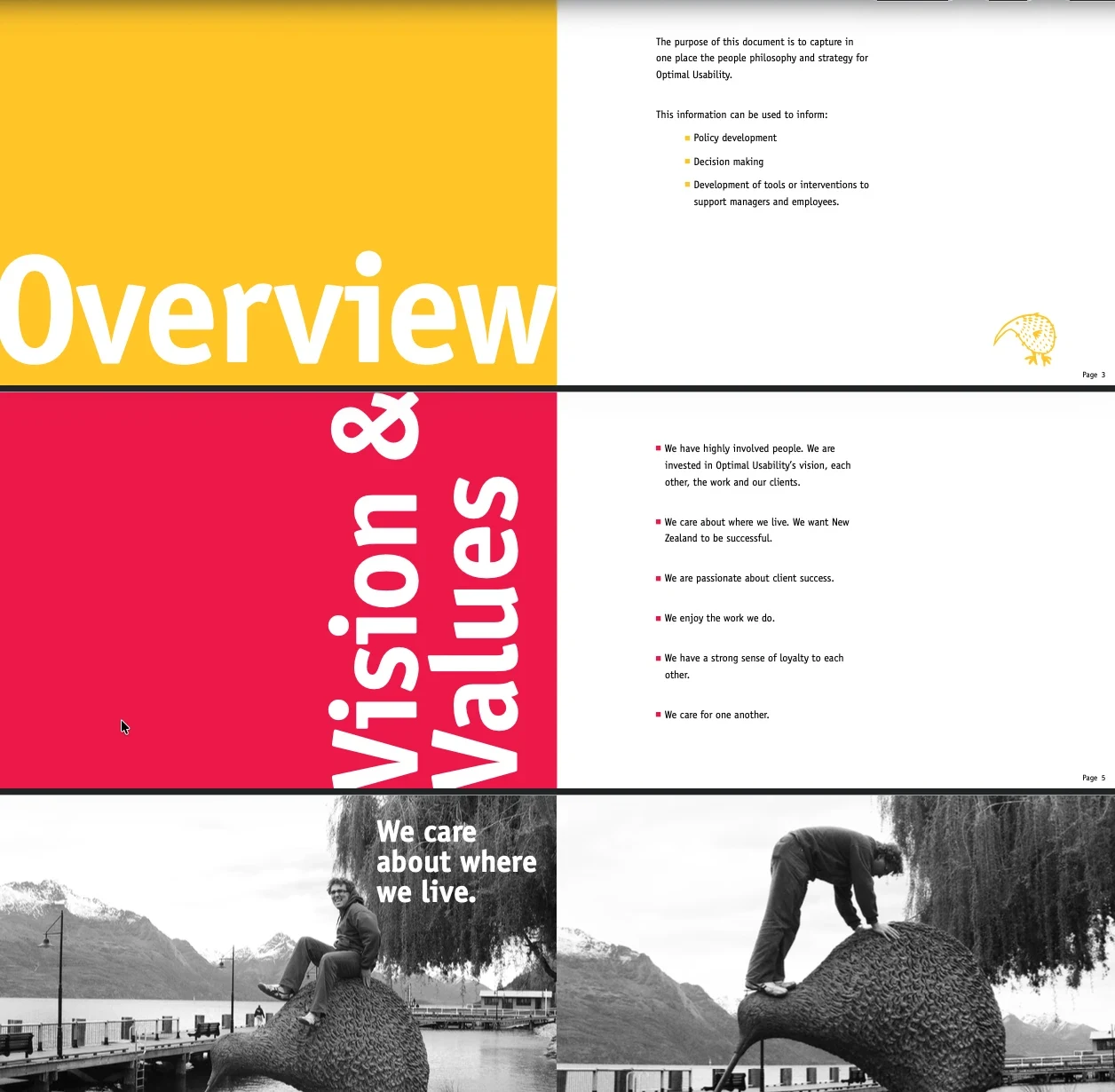
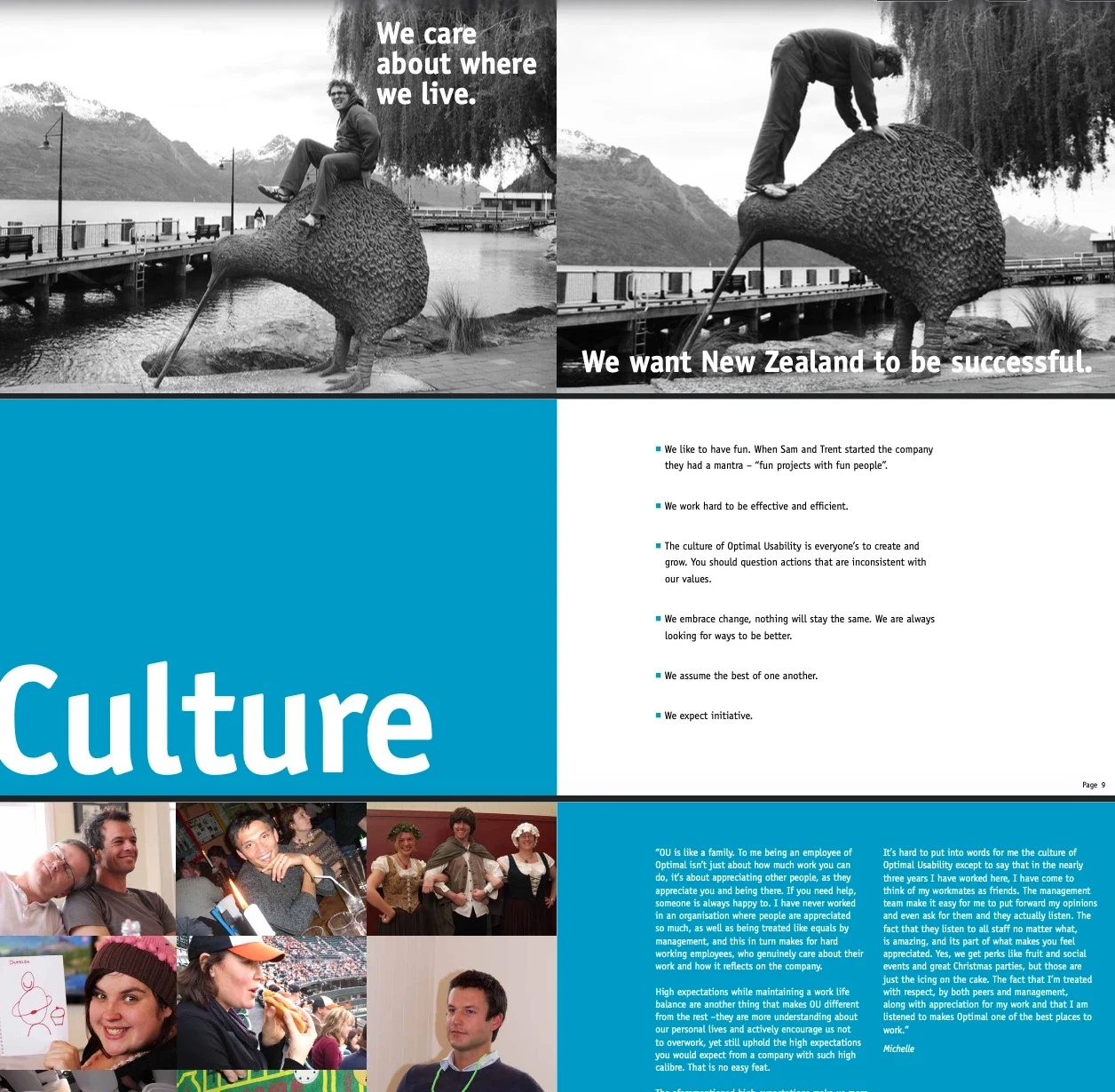
In 2011 we attempted to document our culture with a Culture Book.
By 2012, I was restless and ready for something new. By that stage we'd grown from the two of us sharing a desk to 31 staff, three offices (Auckland, Wellington, Sydney), and 250+ of New Zealand's biggest organisations as clients (with an NPS of 65).
We won a pile of business awards along the way including Startup of the Year (2006), Deloitte Fast 50 (2007, left, and 2008), Wellington Gold Awards (2010), Best Plain English Website (2011) and AUT Excellence in Business Support (2012, right).
PwC bought the business in 2014. By that time, the three owners of the business (Shailesh Manga joined as our third founder and director shortly after we started) were all out of the day-to-day running of the business and it felt like the right time to sell. PwC was a good match, combining our research and design skills with their reach into the boardroom.
Signing the Sale and Purchase Agreement in the PwC offices, 2014.
The Optimal Experience team celebrating the PwC acquisition on the 4th of July, 2014.
Chapter Three · The product company
3. Optimal Workshop
2007–present · Co-founder
In late 2004, BNZ hired Optimal Experience to do a large-scale card sorting project to help improve their online banking. At the time, our options were running the study in person, asking participants to download clunky software, or using an online tool that didn't fit our needs. None of them were good enough, so we built our own tool.
How we used to run card sorts (left). Our online tool, OptimalSort, let us scale from dozens of participants to thousands (right).
Two years later, we made the decision to turn the card sorting tool into its own business. After all, if we found it useful, wouldn't other usability nerds find it useful too? We called the new company Optimal Workshop.
The offsite where we decided to spin out Optimal Workshop, December 2006. At that stage, we had no idea it would become the (much) bigger business.
Nineteen years on, participants from more than 150 countries have completed studies using Optimal Workshop, over 20 million research insights have been gathered, and the customer list includes Netflix, Apple, Lego, Uber, Tesco, HSBC and the NHS.
OptimalSort today, still helping researchers understand how people find and make sense of information.
We initially funded the business ourselves. Between 2006 and 2010, we reinvested $650,000 of dividends from the consulting business. In 2021, we sold a 60% stake to private equity firm Pioneer Capital.
The email from Pioneer Capital confirming the deal, 2021.
Chapter Four · Getting fired
4. Vend
2013 · Chief Product Officer
In February 2013, I met a guy with a moustache called Vaughan about a Chief Product Officer role at Vend, a point-of-sale SaaS business growing 10% month-on-month. After stepping down as Optimal's CEO, it sounded like the perfect gig: I'd be responsible for the developers, testers and designers, and it was based in Auckland, where I was keen to return after spending a couple of enjoyable years setting up Optimal's Auckland office in 2005.
The Vend product and tech team in 2013. Looks like an album cover for a ska band.
It was a hectic time. I joined as employee forty-something and hit the ground running. I grew the team by nine, ran a graduate recruitment programme, had my team visit customers at least once a month to see how Vend was used in the wild, introduced personas to underpin our product strategy, and earned a perfect 100% "Person I Report To" score in the Best Workplaces survey.
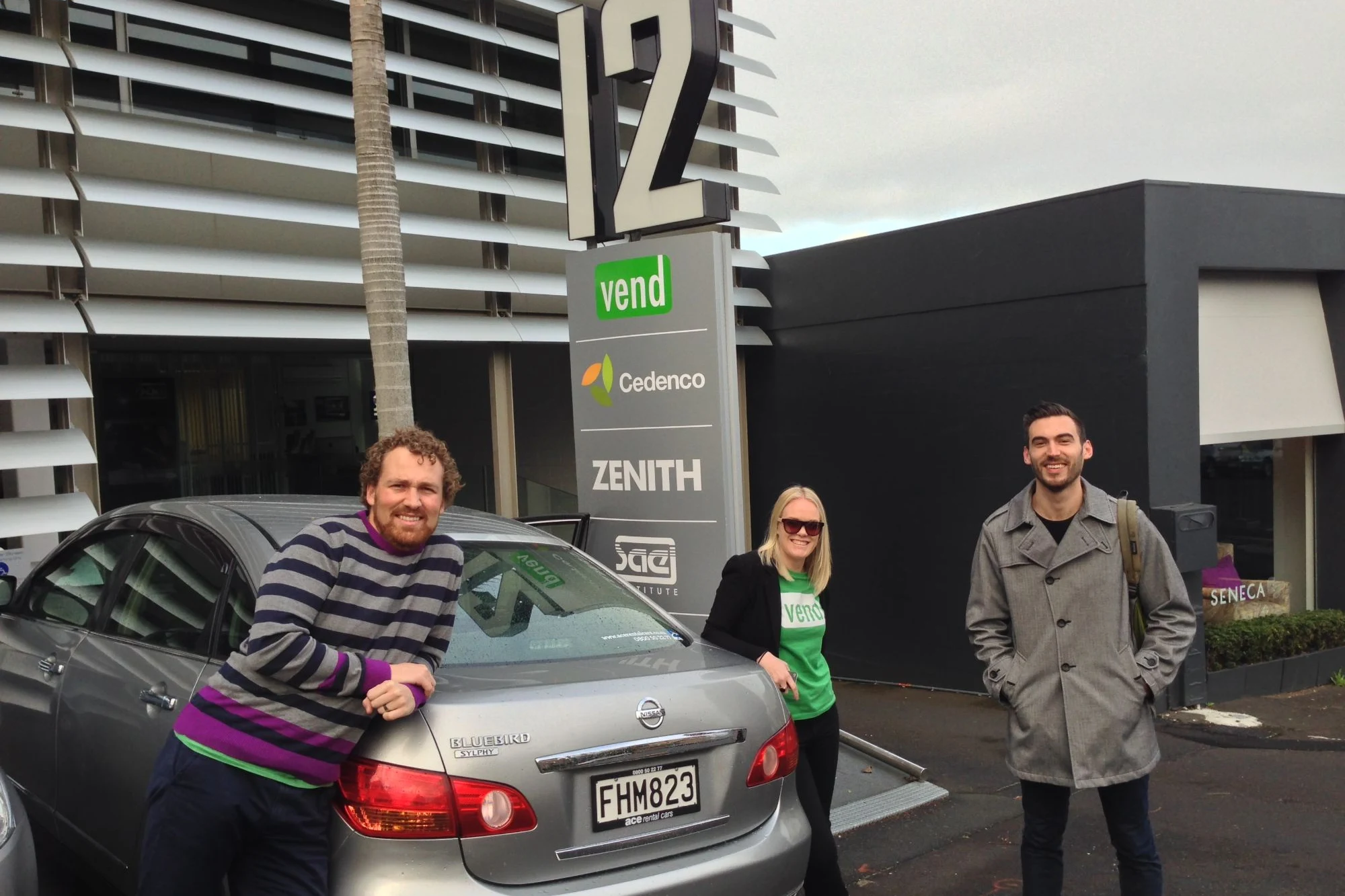
Road-tripping around New Zealand, trying to convince university students to join the team. Me with Sarah Hui and Jordyn Riley at the University of Canterbury (left), and with Kirsti Grant and Rowan Oulton outside the Vend office before heading to the University of Waikato (right).
Then, after nine months, I was abruptly fired. To this day, I can't even really tell you why (although I have a theory).
The good news is that I invested some money when I joined which returned 8x when Vend sold to Lightspeed in 2021. Yay, me.
Vend sold to Lightspeed for approximately US$350 million in March 2021.
I ran a customer workshop with all 130 of Trade Me's people leaders in 2017.
Chapter Five · The big leagues
5. Trade Me
2014–2019 · Chief Product Officer, then Chief Customer Officer
Shortly after telling the CEO he shouldn't hire a Chief Product Officer, I got hired as Trade Me's inaugural Chief Product Officer. According to the 2015 annual report, my role was to "make sure we build the right things, and make them great." OK. No pressure.
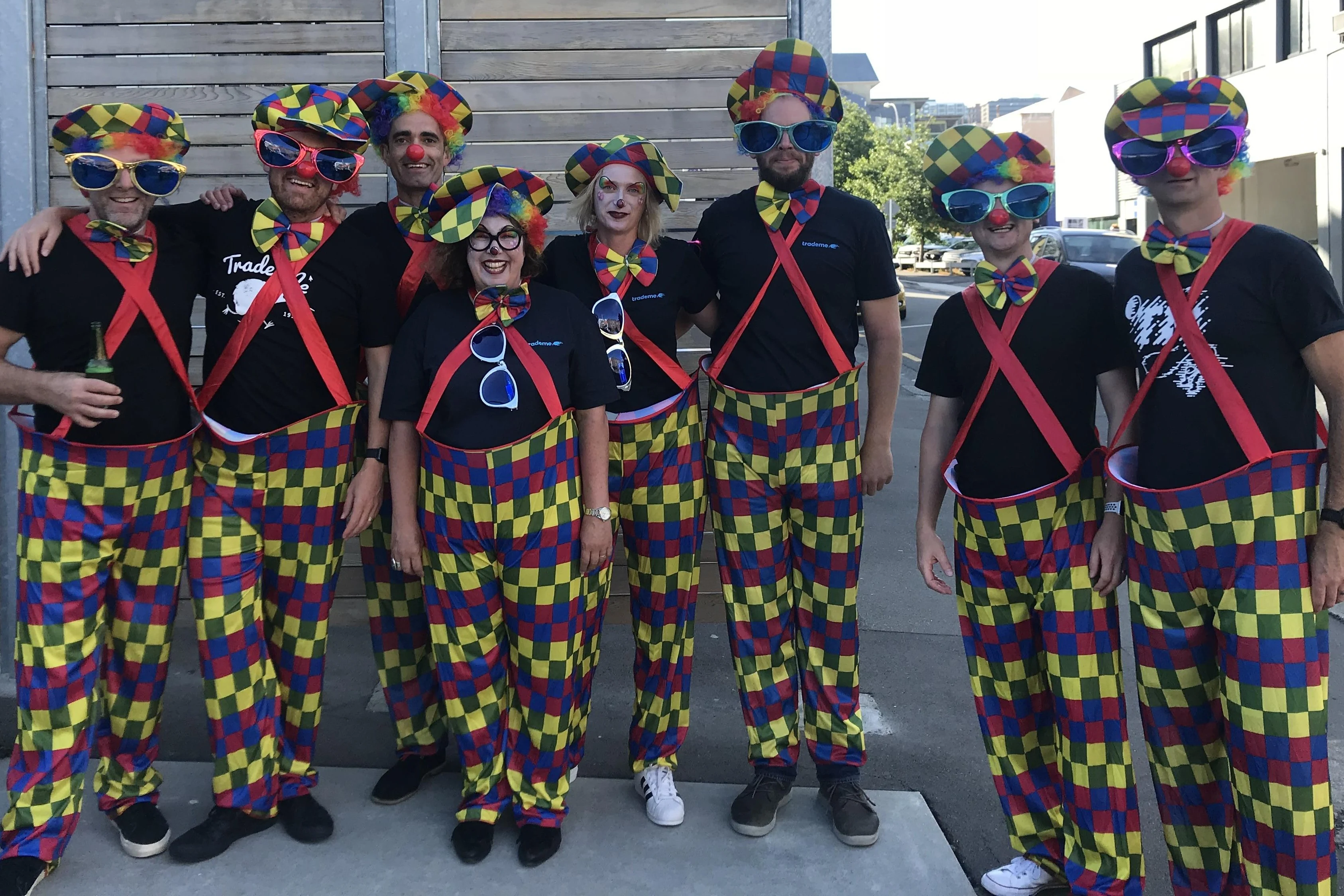
The Trade Me executive team when I joined, November 2014 (left). The truth is they were a bunch of clowns (right).
I was in the big leagues now: an officer of a $2.5 billion NZX/ASX-listed online marketplace and classifieds business with 464 staff and 800,000 visits a day.
As CPO, I managed a diverse 48-person team covering UX, design, mobile, business agility, product development, and BI, as well as having a dotted-line relationship with 22 product managers who worked in the revenue-generating business units.
Eight weeks into the job, hosted my first product management offsite.
“You are capable of doing big things, and you are inspiring to be around. When you joined Trade Me, I remember the enormous feeling of optimism and excitement you brought about the future... having vision, tackling hard problems, and building a team is a gift.”
I set about building the product management practice, sponsored a $20 million programme to modernise Trade Me's website, and led the home page redesign (23 million page views a month) which launched in August 2015 after just three months of development.
An early iteration of the redesigned Trade Me homepage that we affectionately called 'catsplat.'
After a couple of years, as a result of a restructure of the executive, I then took on the role of Chief Customer Officer. My remit changed to include Customer Support (11,000 contacts a week), Trust and Safety (which processed a suspicious-activity alert every 80 seconds on average), and Marketing and Comms (30-200 media mentions a week). All up, 127 people and an $11.4 million budget, a step up from leading the Product team.
Some of the ways I encouraged us to get closer to customers: YeahNah wall (left), Mean Tweets (middle), and executive customer visits (right).
After four-and-a-half years, I was ready to move on. I felt like my biggest contribution had come in the first 18 months, when I was the new guy, and at the exec level it felt like we were optimising for our own areas rather than the business as a whole.
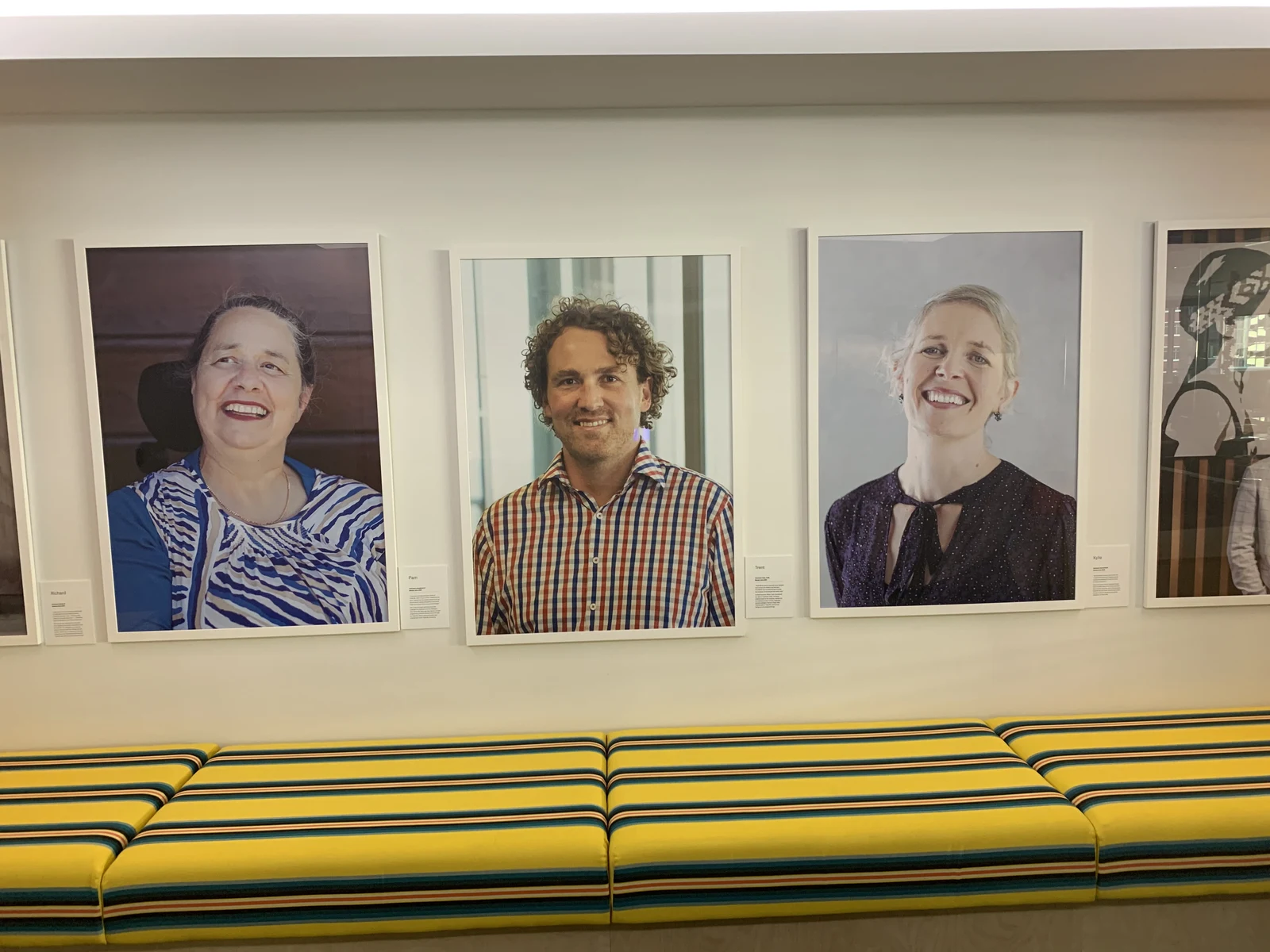
As CCO, I ran a programme to make heroes of our customers. These giant images and stories featured throughout our offices, annual reports and all-company conferences. On the day that I left, my team surprised me with my very own Customer Hero poster in the reception.
(Side note: the most impactful six words I ever said at Trade Me came early on, when I remarked in an all-company meeting that there were "too many dicks on the dancefloor" after noticing the all-male speaking line-up. My friend Ruth talked about it on the BraveUX podcast.)
We used Westpac Stadium to host our Wellington career fair, with 485 employers and 686 students attending in 2019.
Chapter Six · The give-back
6. Summer of Tech
2019–2023 · CEO, then Chair
After such a commercial role I wanted to give back, and Summer of Tech was the perfect fit: a not-for-profit that helps tech students launch their careers through internships. They needed someone to help cover the CEO's maternity leave, and I'd been impressed by the quality of their interns for more than a decade.
Me with some of the Summer of Tech crew, December 2020.
Summer of Tech achieved an extraordinary amount with a very small team. During my time there, we had just 2.6 full-time equivalent employees (supported by two part-time interns, 21 ad hoc workers and 214 volunteers). Yet in 2019 alone, 4,800 people attended our in-person events, including skills workshops, career fairs, and practice interviews.
1,431 speed interviews across two days (left). Placement Day, where months of planning came down to a frantic few hours as students found out who had hired them (right).
When COVID hit in 2020, we had to figure out how to run an events-based organisation without any in-person events. Somehow we kept internship placements within 4% of the previous year.
Hosting a virtual hackathon in 2020. Please notice my nice hat. Less nice was my guinea pigs weeing all over me, live on camera.
It was supposed to be a one-year stint, but I ended up staying for two "seasons." By the time I left, placements had increased by 45% to 352 interns, our sponsors had nearly doubled, and our finances were much healthier. I stayed on as Chair for another two years.
Summer of Tech won the Best Contribution to the NZ Tech Sector award at the 2022 Hi-Tech Awards.
Back at the University of Waikato for TechWeek, 2025.
Chapter Seven · Now
7. Now
2021–2026 · Director, Investor, Advisor
I deliberately left full-time work in 2021 to spend more time with my kids. That meant road patrol, school camps, cross-country marshalling, touch rugby coaching and running the school's silent auction. It also gave me the space to build a portfolio across governance, strategy and advisory, investing and mentoring, and writing and speaking.
The Island Bay School silent auction in full swing. I used my sales skills to raise about $50,000 over the three years I was in charge.
Governance
I chaired the Summer of Tech board for two years before spending three years on the Creative HQ board, a nice full-circle moment after being one of its first tenants in 2002. I'm now an independent non-executive director at Dot Loves Data, a data insights business owned by ANZ.
The Creative HQ team and board with the then Mayor of Wellington, Tory Whanau, in 2021.
Strategy and advisory
I've run strategy workshops in Melbourne, Auckland and Wellington, helping owners work out what they actually wanted from their businesses, then working backwards from there. In 2025, I helped develop a five-year strategy for the Samoa Business Hub on behalf of New Zealand's Ministry of Foreign Affairs and Trade.
Fieldwork in Samoa for the Business Hub strategy, 2025. I had to decline the offer to keep the fish.
Investing and mentoring
I've invested in a dozen early-stage startups across New Zealand, the US and the UK. In 2023, I co-founded the Wellington Startup Collective with a few friends. It follows a 'no advice' format where founders share their problems, while former founders tell stories and ask questions.
The Wellington Startup Collective in 2025.
Writing and speaking
I write Dear Sam, a Substack where I muse about life (50 posts and counting). I also speak, facilitate and MC events, most recently the 2025 Startup World Cup.
In action at the Startup World Cup, 2025.
It has been a varied and rewarding few years. After looking for the right opportunity to go deeper again with one organisation, with a meaningful mission and a great team, solving hard (interesting! juicy!) problems, I have joined MetService as Chief Customer and Commercial Officer.
What I am good at
Nothing like a good offsite to build the team.
People
I've built and led teams of every shape and size, from a two-person startup to a 127-person business unit, from interns earning the Living Wage to senior managers earning $260,000 a year. I've interviewed hundreds of candidates and hired many dozens, and run graduate recruitment programmes at two companies. I've done all the hard stuff too, led restructures and redundancy processes, and navigated underperformance and personality clashes. I'm proud of the 86% and 100% Kenexa engagement scores I scored along the way. More recently, I've mentored mid-career leaders from companies like Xero and Atlassian.
Like many businesses, COVID-19 forced a re-think of our strategy at Summer of Tech.
Strategy
I've led strategy as CEO twice, helped shape company-wide strategy at Trade Me, and owned product and design strategy at Vend. I regularly facilitate 'North Star' workshops to help founders align their business direction with what they actually want out of life (including one memorable away day where the founder concluded the right answer was to quit.) More recently, I've worked with government agencies, service businesses and international development organisations on strategy.
The March 2014 cohort for the Institute of Directors Certificate of Company Direction.
Governance
I've been a director for 23 years, across private companies, not-for-profits, council-controlled organisations, and now a bank-owned subsidiary. People tell me I ask unexpected questions, especially with a product and customer lens. I'm also the kind of director who'll roll up his sleeves. Most of these roles have been in New Zealand, although I've also served on the US-based Usability Professionals' Association board and the board of Optimal Experience's Australian subsidiary (2008–14). I've sat on both sides of the board table, which gives me a practical understanding of what makes boards and executive teams work well together. Along the way I've led acquisitions (including Optimal Workshop buying a US competitor, and helping with Vend's first) and sold a company (Optimal Experience to PwC).
Presenting the culture change story in 2018.
Customer
I've spent my career helping organisations build better customer experiences, from writing software myself, to a decade as a user experience researcher (personally consulting to around 90 organisations including Air New Zealand, Te Papa, ACC and most of New Zealand's major banks), to my work as Trade Me's first Chief Customer Officer. At Trade Me, I led the UX team, developed a company-wide programme to increase customer intimacy, sponsored the rollout of NPS across the business, and created Customer Aroha, a month-long initiative focused on finding and fixing customer friction.
I helped standardise our roadmaps across Trade Me.
Product
Across Vend and Trade Me I built the product management practices from scratch. At Trade Me, I introduced tools, frameworks, metrics, reviews and governance to create a common way of working. I also created a formal mentoring programme that developed six of Trade Me's then-current product managers.
The metrics framework I introduced at Trade Me.
Systems and practices
Wherever I go, I try to leave behind an operating system: routines, frameworks and rituals that keep working after I've moved on. That could mean anything from implementing a CRM (something I've done twice), through to the weekly one-on-ones, offsites, team manifestos and baking competitions that help glue a team together. I brought the same systems mindset to Optimal Experience early on, and it was one of the reasons the business attracted such a strong sale price.
I ran a "How to Think Like an Entrepreneur" workshop at UX Singapore, and then taught it to 80+ staff at Trade Me.
Entrepreneurial grit
I'm a founder with two exits, have invested in a dozen startups, spent time in four incubators, and even worked briefly for the corporate venturing arm of Spark. Over the years I've helped dozens of founders across Australia and New Zealand through Creative HQ's accelerator programmes, Lightning Lab, Kōkiri and Te Pūtahitanga o Te Waipounamu.
A breakfast briefing at Optimal Experience.
Marketing
At Optimal Experience, I led our B2B marketing efforts built around thought leadership, including hosting breakfast briefings that frequently sold out, doing PR, and presenting our work far and wide. At Trade Me, I was responsible for a 23-person marketing team with a $5.4M budget covering brand, marketing automation, SEO, SEM, content, social and community.
We were in the Deloitte Fast 50 in 2007 and 2008.
Sales
I grew Optimal Experience from 0 to more than 250 clients, led the business into the Deloitte Fast 50 twice, and grew revenue by 25% a year through the GFC. At Summer of Tech I doubled revenue after my first year in charge. My philosophy is simple: build relationships, understand what a client is trying to achieve, systematise the follow-up.
Presenting a workshop in Berlin, 2013.
Communication
I've presented workshops, keynotes and conference talks in seven countries. I've appeared on podcasts and panels, MCed conferences and events, and been interviewed many times, including by Kim Hill. I've always enjoyed writing, from the monthly newsletters we sent to more than 2,000 subscribers at Optimal Experience, to the 132 weekly newsletters I wrote to my teams throughout my time at Trade Me (some are still on Medium), to Dear Sam, my recent experiment in documenting life.
ProductTank Wellington, one of four professional communities I co-founded.
Community building
As a high school student, I founded a local chapter of Students Against Driving Drunk. As a graduate, I co-founded Unlimited Potential for young IT professionals. In 2005, I co-founded the New Zealand chapter of the Usability Professionals' Association (UXPA) and then spent three years on its international board as Director of Marketing and Comms. More recently, I co-founded ProductTank in 2016 and the Wellington Startup Collective in 2023.
Resting at the top of the Summit Rocks on the way up Aoraki/Mt Cook, December 2017.
Beyond work
Day six of a 12-day trek across Corsica, 2025.
Tramping and mountaineering. I usually complete 4–10 overnight tramps a year, mostly in New Zealand (although I did spend 12 days walking across Corsica with some friends in 2025). I've done a bit of mountaineering too.
Racing the Whaka50, Rotorua.
Mountain biking. We are very spoilt in Wellington with the number and variety of trails. I occasionally enter races to keep the skills sharp, like the TransNZ (an epic multi-day enduro race), the Whaka50 (50 km through Rotorua's famous trails), and of course, the Karapoti Classic (why is this a race?)
At the Occasional Brewer, where I first learnt to brew.
Home brewing. I enjoy brewing and have won 10 medals at the Aotearoa Homebrew Competition, including two golds for a bière de garde and an English barleywine. I also started the South Coast Brew Club with some fellow gentle brewers in the neighbourhood.
DJing at the Creative HQ Christmas party. No-one was dancing, but I was having a good time.
DJing. I play mostly old-school hip hop with a sprinkling of drum and bass.
Richard Parker, surveying his kingdom.
Family. I have two teenage kids and a friendly Burmese cat named Richard Parker.
The question is: have I read the Fifty Shades of Grey erotic novels? Or are they still on my to-read list?
Reading. Every year I read (or listen to) somewhere between 35 and 50 books, a mix of non-fiction and novels.
In Spirit Island, the players are powerful island spirits (duh), working together to repel invading colonisers.
Board games. My partner and I play board games most Monday nights, and when she's not around I play a lot of solo Spirit Island, a challenging strategy game (500 hours and counting).
Running can be fun. And sometimes, un-fun.
Trail running. A recent addition to the list.
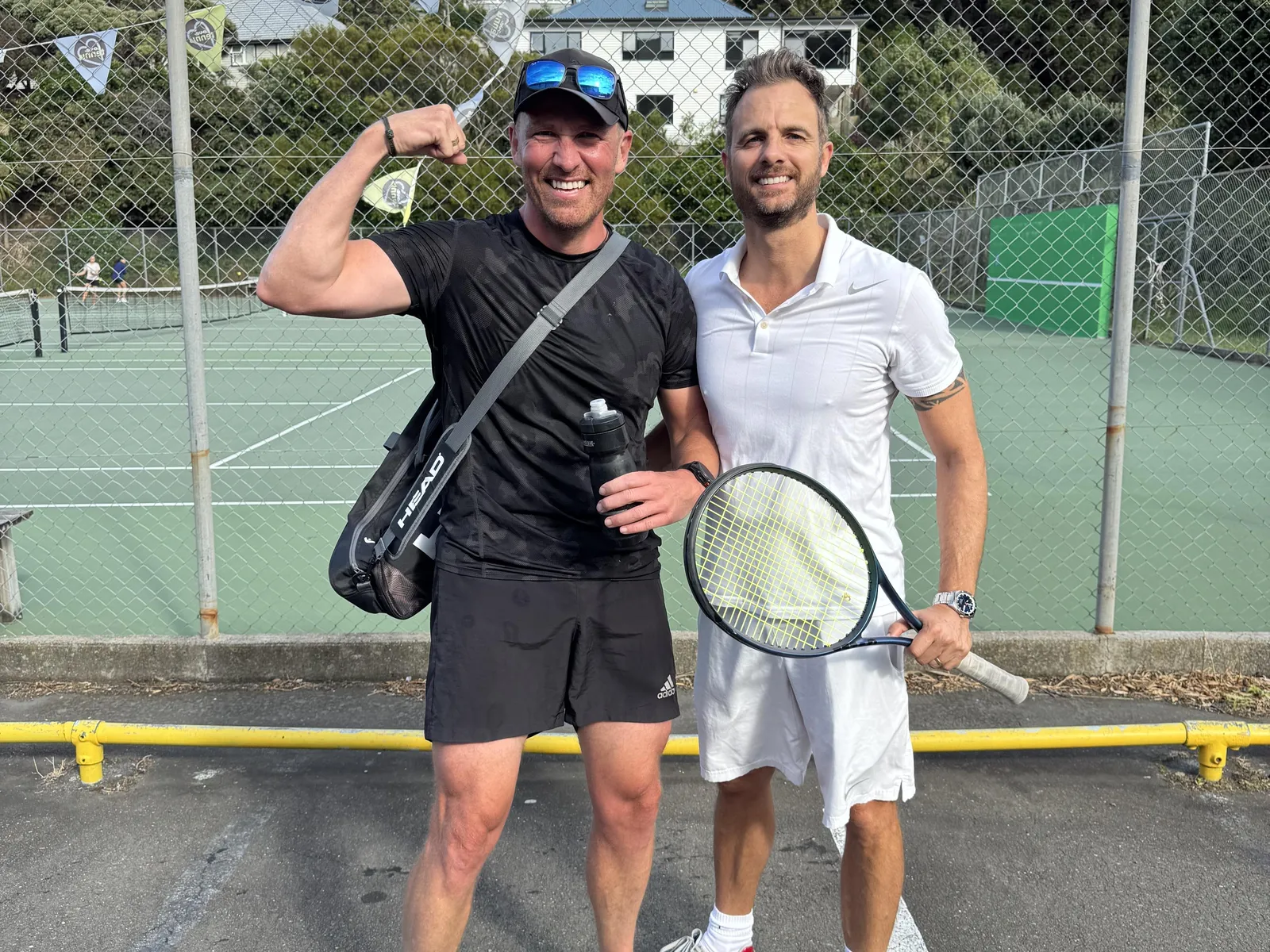
Playing for the annual Frear-Mankelow Cup, 2025.
Tennis. I've enjoyed playing tennis since I was a kid.